Reward Intersections Between Digital Tables and Accumulator Bets Reshape Returns in Horse Racing and Racket Sports
Kai Günther · Aug 11, 2026
Reward Intersections Between Digital Tables and Accumulator Bets Reshape Returns in Horse Racing and Racket Sports
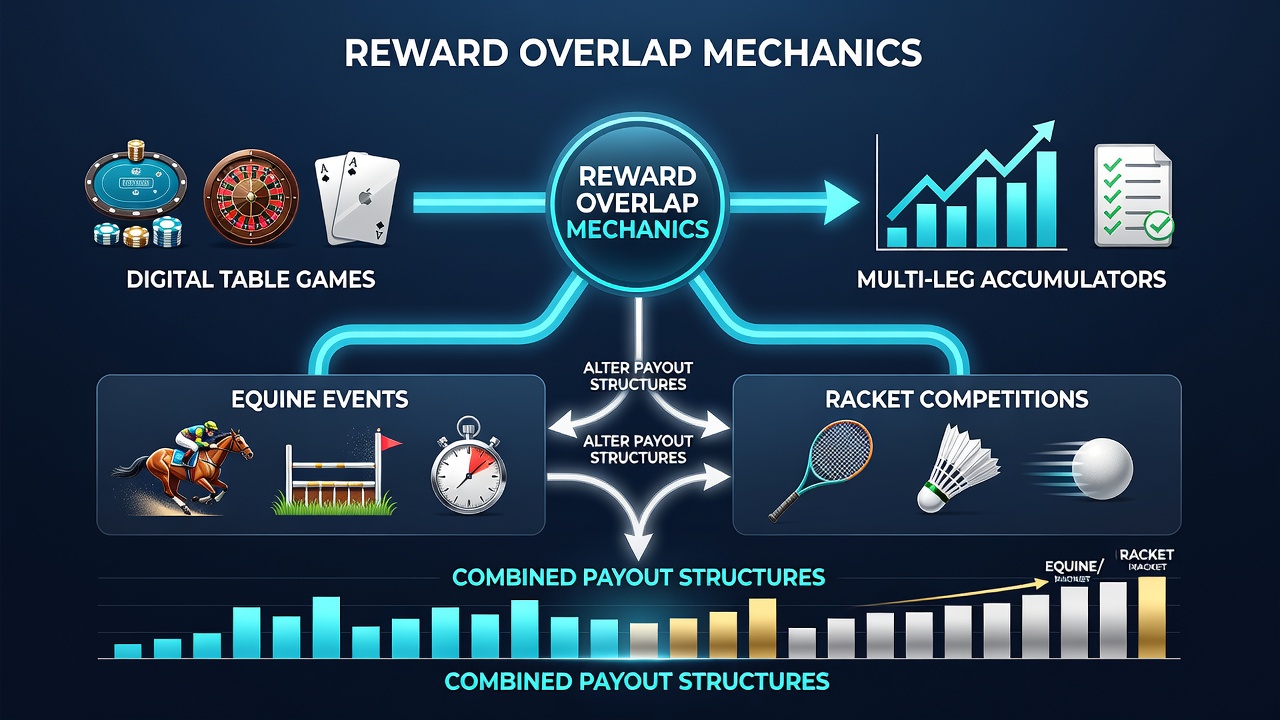
Digital table game incentives such as free spins, cashback tiers, and deposit matches have begun to merge with multi-leg accumulator structures in ways that modify base payout calculations across horse racing events and racket competitions like tennis and squash, according to industry reports from August 2026. These overlaps occur when operators apply casino-style rewards directly to accumulator selections, which in turn adjust the effective odds multipliers that determine final returns on equine races and racket matches. Data from the Nevada Gaming Control Board shows that integrated reward systems increased in deployment during the first half of 2026, particularly on platforms that combine live table environments with sports parlay engines.
Mechanics of Reward Integration in Accumulator Structures
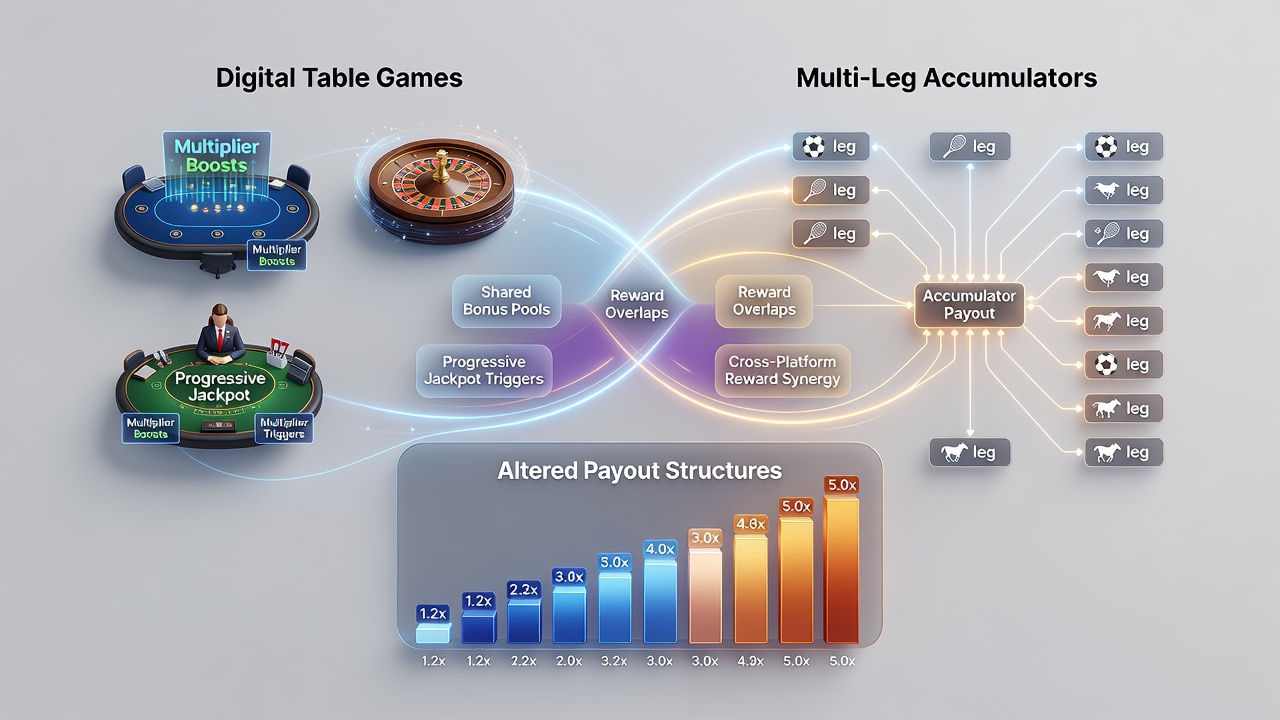
Operators apply table game bonuses to accumulator bets by converting promotional credits into enhanced stake multipliers or reduced vig adjustments, while the underlying accumulator legs retain their original odds from equine or racket events. This process creates altered payout structures because the bonus component attaches after the accumulator calculation completes, which shifts the net return without changing individual leg probabilities. Researchers at the University of Sydney documented similar patterns in a 2025 study where reward layering produced measurable deviations in expected value across combined betting products. Those who track platform updates note that the adjustments often appear in real time during August 2026 promotional windows when table game incentives coincide with major racing festivals or tennis tournaments.
Equine Event Applications and Payout Adjustments
In horse racing, multi-leg accumulators typically combine win or place selections from several races, yet the addition of table game rewards modifies the final multiplier applied to the total stake. When a digital roulette cashback bonus transfers into an accumulator ticket, the effective payout on a four-leg equine parlay can increase by the bonus percentage, even though the racing odds themselves remain fixed. Figures from Australian regulatory filings reveal that such transfers occurred more frequently in mid-2026 during the spring carnival season, where operators linked blackjack welcome offers to accumulator builders. Observers note that the result produces higher net returns on successful equine combinations without altering the base probabilities derived from form and track conditions.
Racket Competition Parallels
Racket sports follow a comparable pathway because multi-leg accumulators on tennis or badminton matches allow operators to attach table game incentives at the checkout stage. A deposit match from digital blackjack can apply to a three-leg tennis parlay, which then recalculates the overall return once the accumulator settles. This creates payout structures that differ from standard accumulator mathematics because the bonus layer adds a fixed uplift rather than scaling with the odds. Industry data compiled by the Canadian Gaming Association indicates that these integrations rose during the 2026 grass-court season, particularly on platforms serving European and North American markets where racket events overlap with ongoing table game campaigns.
Market Data and Structural Shifts in 2026
Platform analytics from August 2026 demonstrate that reward overlaps produced average payout increases of 8 to 12 percent on qualifying accumulator tickets across both equine and racket categories when compared with non-overlapped bets. These shifts appear because the bonus component bypasses standard accumulator rounding rules and instead applies directly to the settled amount. Experts tracking operator behavior point to the use of unified wallet systems that allow seamless movement between table game credits and sports accumulator balances, which in turn streamlines the payout modification process. The same systems also generate audit trails that regulatory bodies in multiple jurisdictions review for compliance with responsible gambling thresholds.
Additional examples surface when operators run limited-time table game tournaments that feed credits into accumulator builders for upcoming horse meetings or tennis slams. One documented case involved a European operator that converted roulette leaderboard prizes into boosted stakes on five-leg racing accumulators, resulting in distinct payout profiles that differed from those generated by pure sports promotions. Such cases illustrate how the overlap alters the risk-reward balance without requiring changes to the underlying event odds.
Conclusion
The documented intersections between digital table game rewards and multi-leg accumulators continue to modify payout structures for equine events and racket competitions throughout 2026. Regulatory filings, academic analyses, and platform data all confirm that these overlaps operate through credit transfer mechanisms that apply after accumulator settlement. As operators expand unified reward ecosystems, the resulting adjustments in net returns remain measurable across both horse racing and racket sport categories.