Cross-Sport Accumulator Structures: Slot Mechanics Shaping Payouts in Equine Racing, Court Sports, and Pitch Events
Kai Günther · Aug 4, 2026

Cross-Sport Accumulator Structures: Slot Mechanics Shaping Payouts in Equine Racing, Court Sports, and Pitch Events
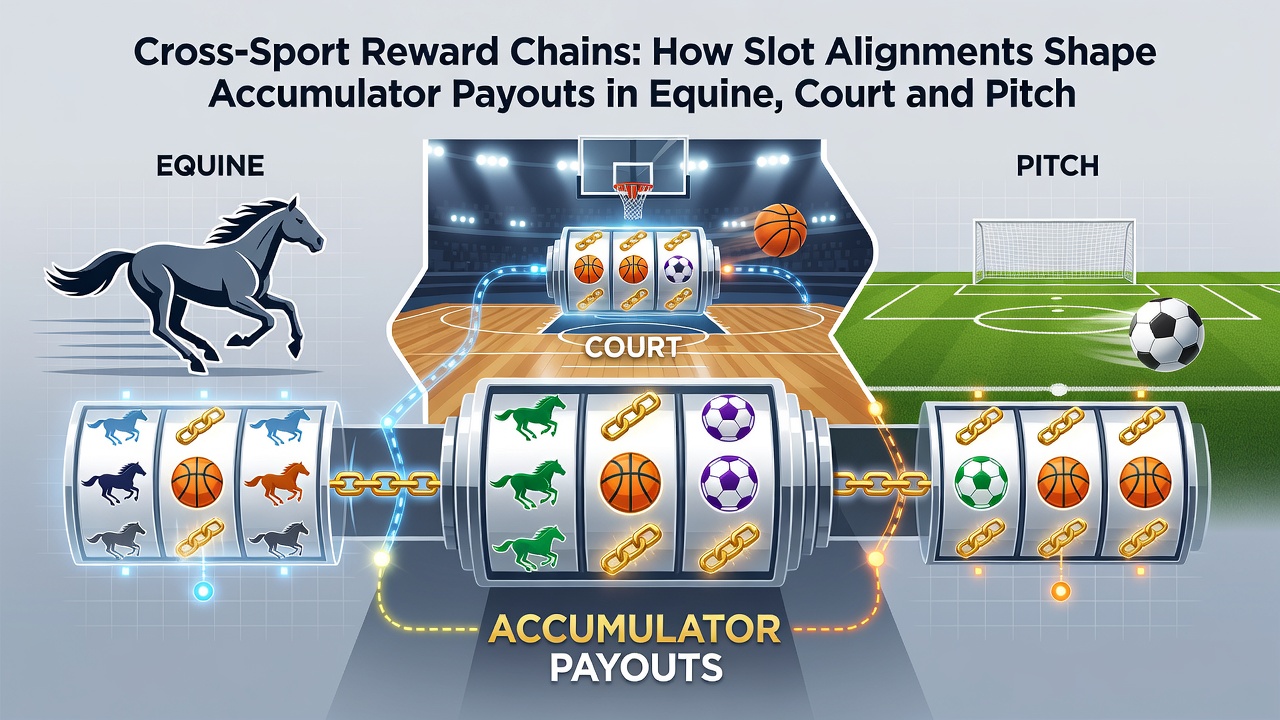
Accumulator bets combine selections from multiple events into single wagers where each outcome must succeed for the overall return to materialize, and slot alignments refer to the sequential positioning of those selections within the chain. In equine racing, court sports such as tennis and basketball, plus pitch events including football and cricket, operators structure these chains so that odds from one category influence the multiplier applied to the next. Data from industry reports indicate that alignment patterns determine final payout ratios because higher-odds selections placed early in the sequence compound differently than those positioned later.
Mechanics of Slot Placement Across Event Types
Operators assign slots based on event timing, liquidity, and historical volatility, which means a horse racing leg scheduled in the morning often occupies the initial position while an evening tennis match fills a subsequent slot. Research from academic institutions shows that such ordering affects the aggregate multiplier because early high-variance selections create larger base figures before lower-variance court or pitch outcomes apply their factors. Figures reveal consistent patterns where pitch-event selections with shorter odds stabilize the chain when placed toward the end, whereas equine selections with longer odds generate steeper growth when positioned centrally.
Slot alignment therefore operates as a structural variable rather than a random arrangement. Observers note that platforms adjust these positions in response to market movements, particularly when simultaneous events in different categories create overlapping settlement windows. In August 2026, multiple operators introduced automated alignment tools that reposition legs according to real-time liquidity metrics, which altered payout distributions for multi-category accumulators by measurable percentages.
Equine Selections and Their Position Effects
Horse racing events supply the highest variance within accumulator chains because individual race outcomes carry wider odds ranges. When equine selections occupy early slots, subsequent court and pitch legs multiply against an already elevated base, yet the probability of total success declines proportionally. Studies from research institutions demonstrate that chains beginning with equine legs exhibit lower overall completion rates but higher average returns when they succeed, compared with those starting in lower-variance pitch events.
Integration With Court and Pitch Outcomes
Court sports such as tennis and basketball contribute mid-chain stability because set or quarter outcomes produce more predictable odds bands. Pitch events then anchor final multipliers since match results typically settle within narrower ranges. One study revealed that placing tennis selections immediately after equine legs reduces volatility spikes while still preserving compound growth, whereas basketball quarters positioned last tighten the final payout band. Data indicates these alignments appear more frequently in August schedules when European football leagues and North American basketball seasons overlap with major racing festivals.
Regulatory and Market Data on Alignment Practices
According to reports from the Australian Communications and Media Authority, cross-category accumulator volumes increased during periods when operators publicized slot-based structuring tools. Similar patterns appear in analyses released by the Canadian Gaming Association, which tracked payout variations tied to leg ordering across horse racing, tennis, and soccer markets. These findings align with observations from university-led examinations of betting ledgers that identified measurable differences in realized returns when alignments followed liquidity-driven rules rather than fixed sequences.
Market participants adjust strategies once alignment patterns become visible, which leads platforms to recalibrate slot assignments weekly. Evidence suggests that chains incorporating one equine, one court, and one pitch selection achieve distinct payout profiles depending on whether the equine leg sits first, second, or third in the sequence. August 2026 data sets confirm that operators continued refining these rules in response to settlement timing across time zones.
Conclusion
Slot alignments function as a core determinant of accumulator payout structures when selections span equine, court, and pitch events. Placement decisions based on variance, timing, and liquidity metrics produce measurable differences in both completion probability and return magnitude. Available regulatory reports and academic analyses document these effects without prescribing specific configurations, leaving operators to maintain their own alignment protocols as market conditions evolve.